Road to Devcon India
libp2p & Ethereum Network Observability Study Group & Workshop Series
Study Group · Technical Workshops · Protocol Analysis · Network Observability
- Date
- 21 August 2026
- Registration
- 10:05 AM
- Program starts
- 10:30 AM
- Lunch
- 1:45 PM – 2:45 PM
- Program ends
- 6:00 PM
- Location
- NSUT Auditorium, New Delhi, India
- Format
- Road to Devcon India · Study Group + Workshop
A community-led technical series for developers, researchers, protocol engineers, and students exploring the networking layer of Ethereum and decentralized systems.
The series brings together developers, researchers, protocol maintainers, infrastructure engineers, and students to explore one of the most important — and least visible — parts of decentralized infrastructure: the peer-to-peer networking layer.
It is supported by an Ethereum Foundation grant and builds on ongoing work across the libp2p ecosystem, including libp2p maintenance and interoperability, Unified Testing and Observability, multiformats and IPLD, protocol analysis, Wireshark tooling, decentralized network measurements, and observability-aware security research.
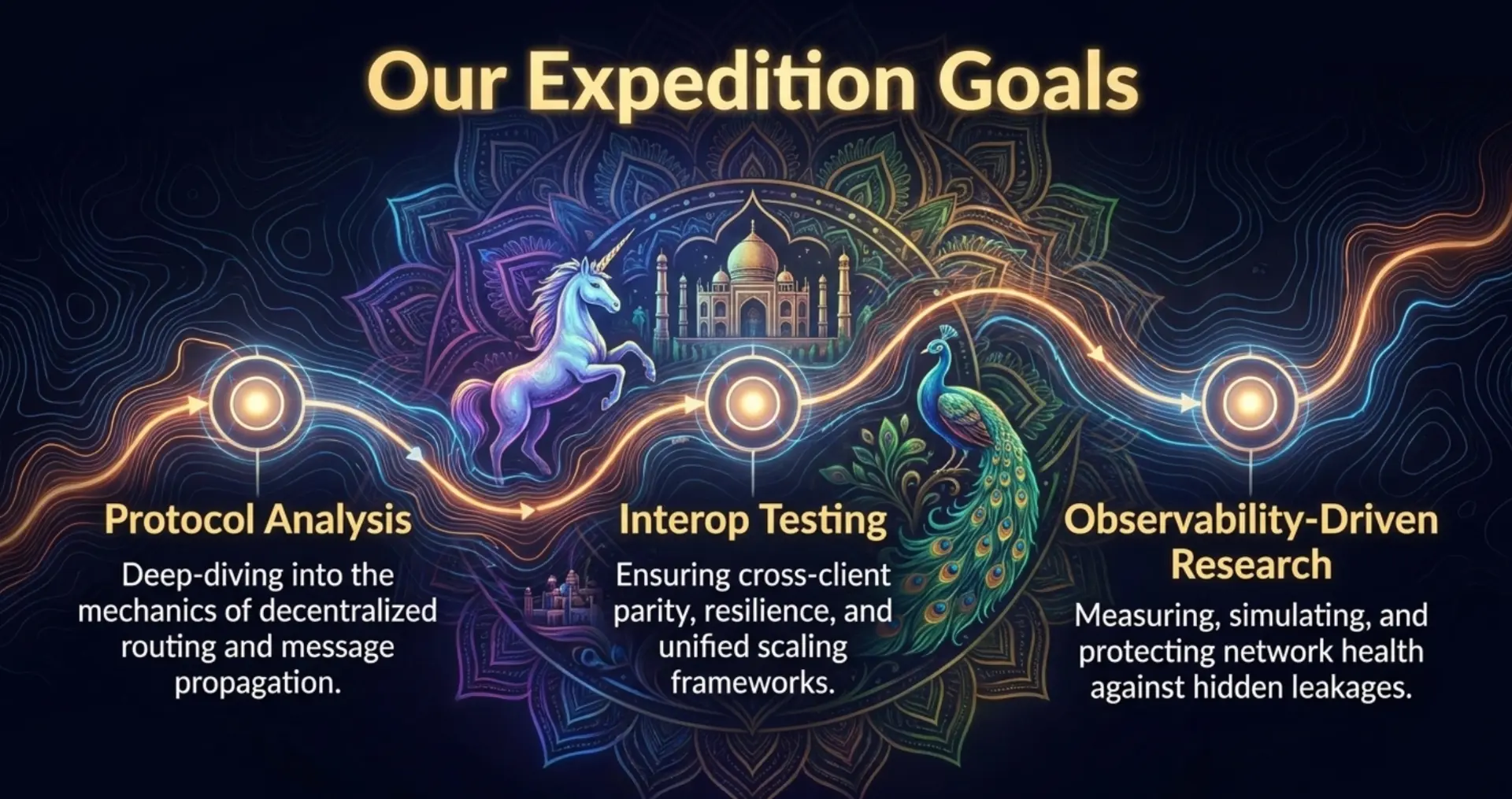
Rather than treating networking as a black box, participants learn how to observe, measure, analyze, debug, and improve decentralized networks using real protocol traces, telemetry, packet captures, interoperability tests, and network measurements.
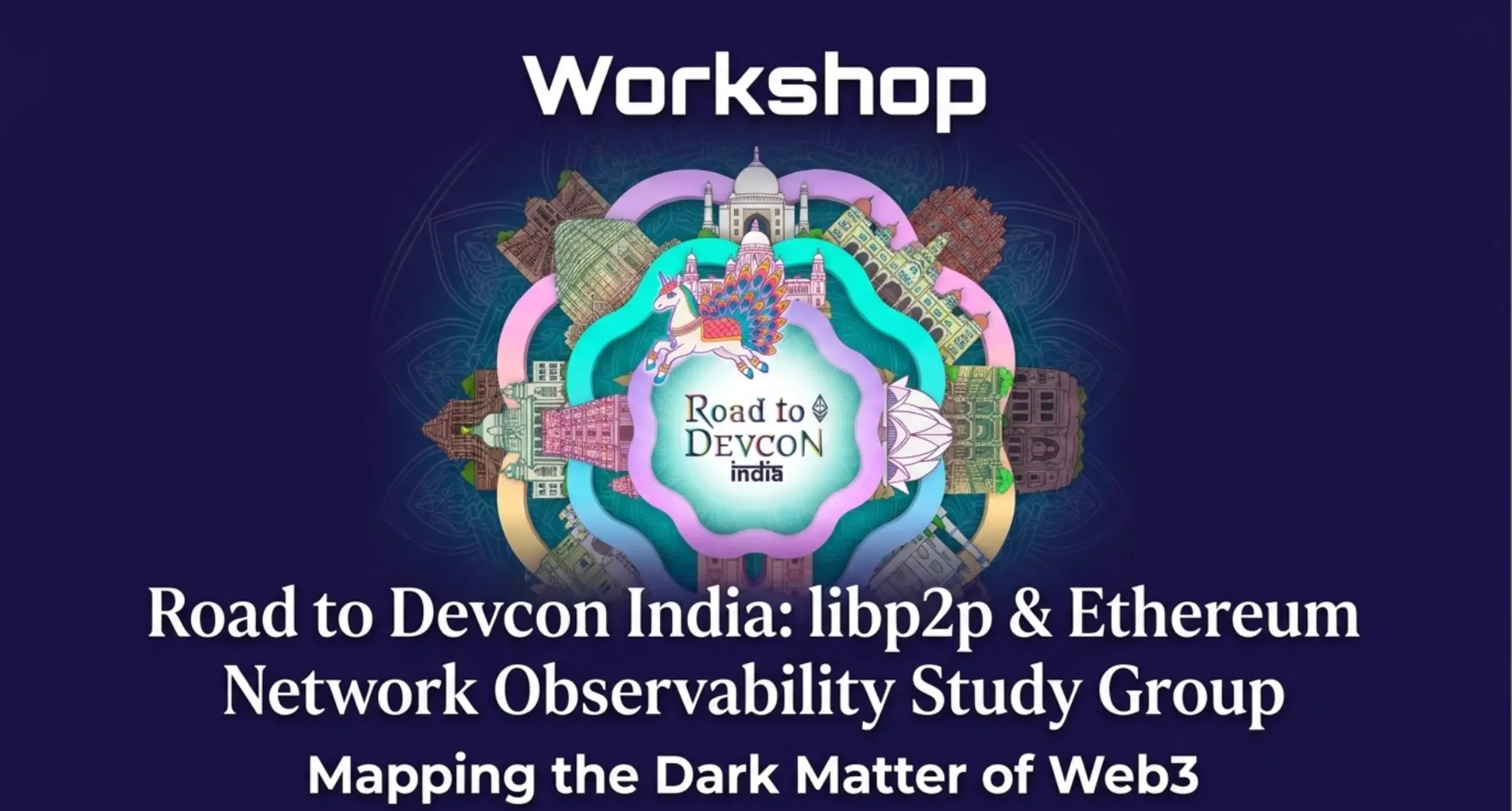
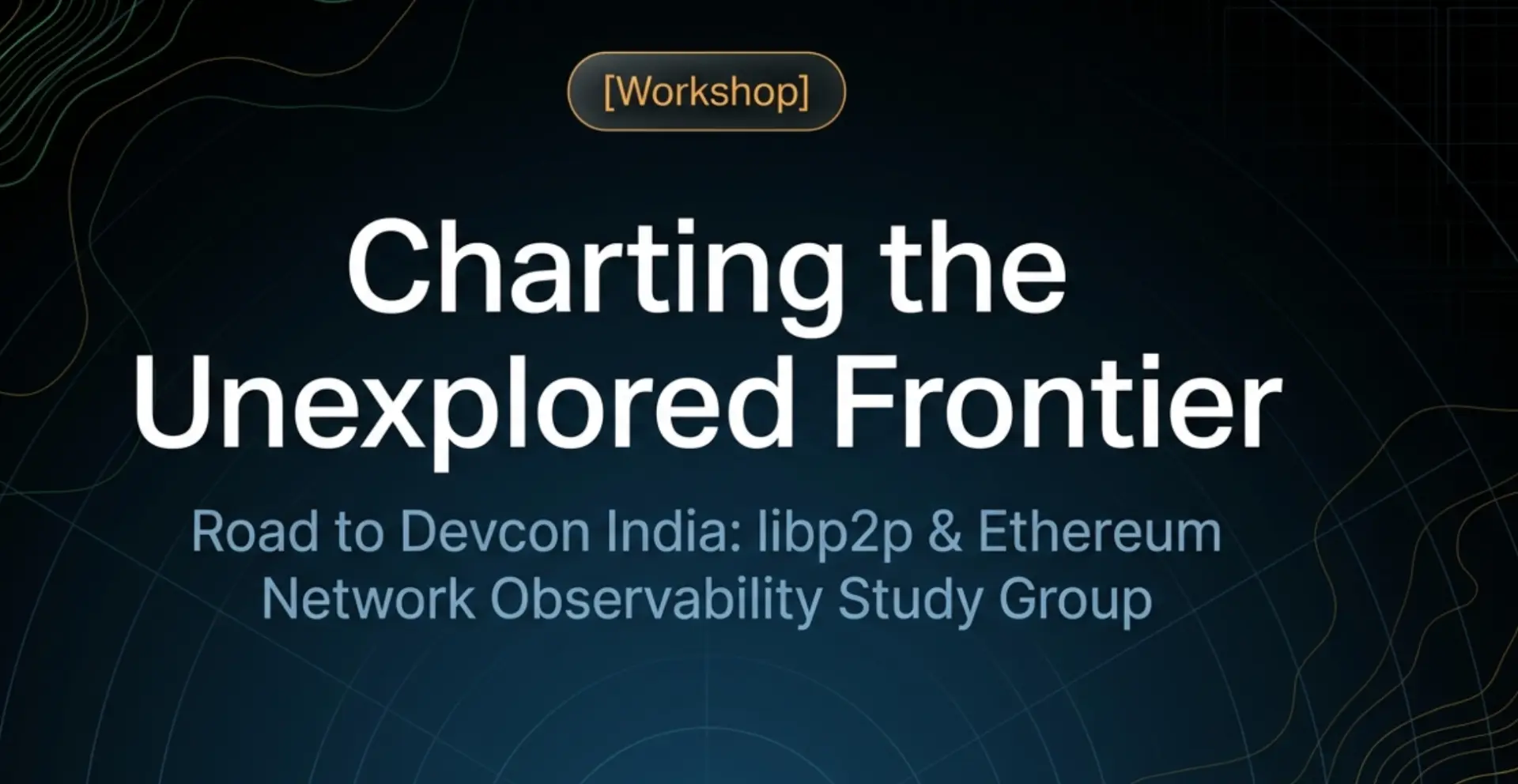
— Workshops So Far
Two sessions delivered with the IndiaAI Mission under MeitY’s NIELIT
We conducted our first four-hour virtual workshop in collaboration with the IndiaAI Mission under MeitY’s NIELIT. It was a highly productive session, and the Road to Devcon program continues to build on it.
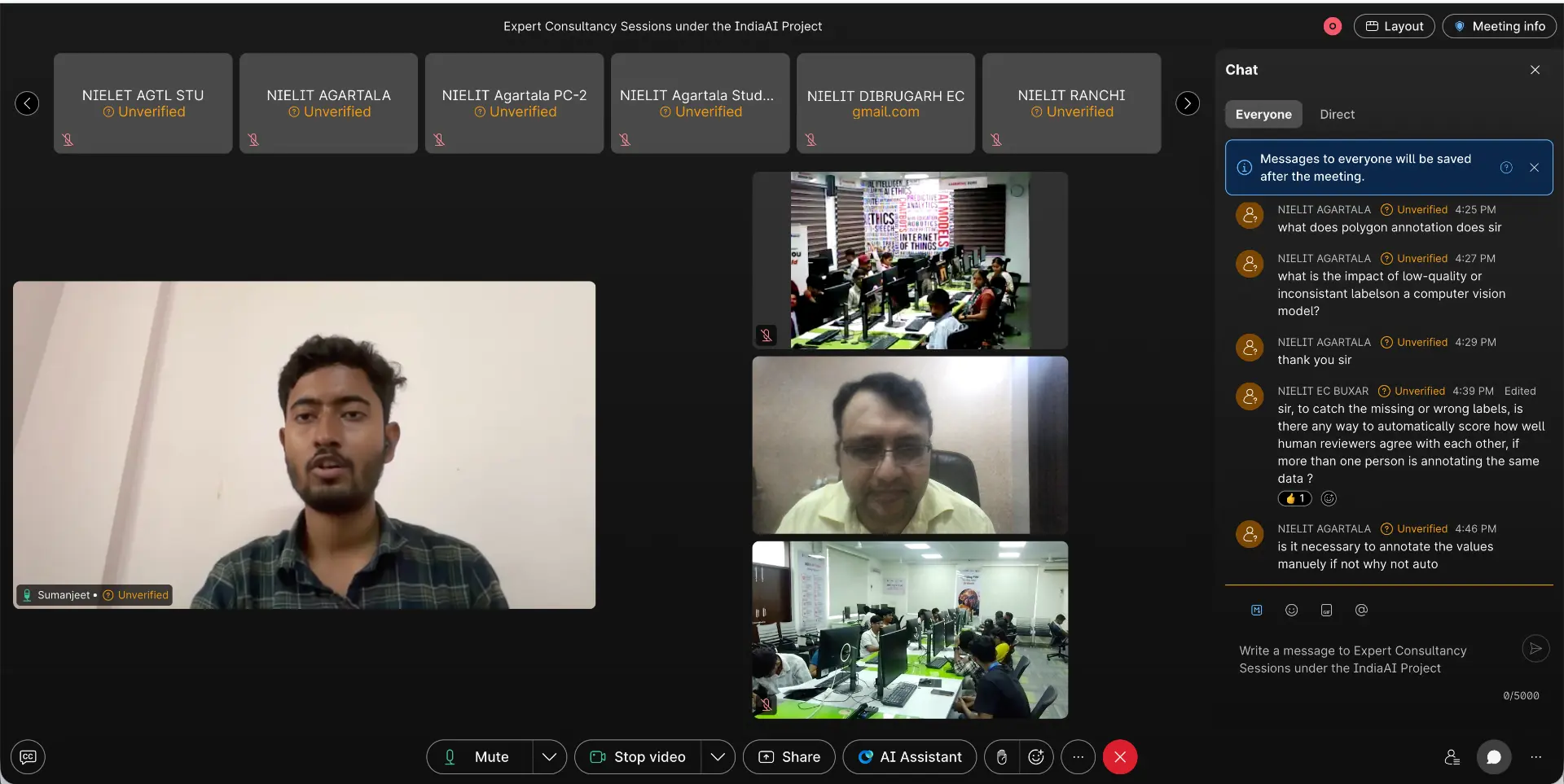
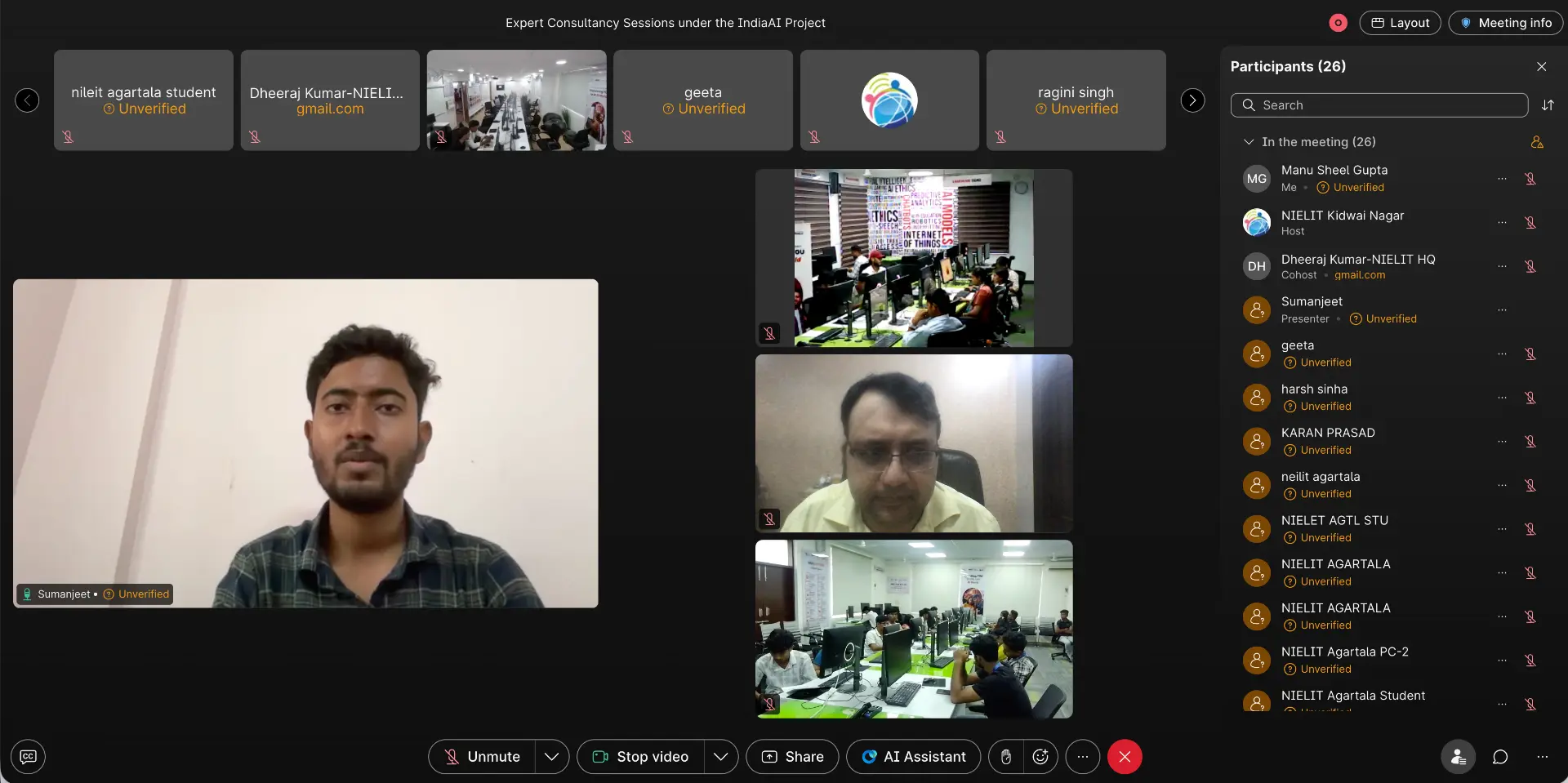
The session was announced barely a day in advance and still drew 750+ attendees registered with MeitY, joining live from 29 NIELIT centres across India — including Agartala, Dibrugarh, Ranchi, Buxar, and Kidwai Nagar — with students, trainers, and centre coordinators participating together.
Sessions ran as guided technical walkthroughs with live Q&A: participants asked about annotation quality, label noise, reviewer agreement, and automated scoring — the same measurement instincts the study group applies to decentralized networks.
- ·Workshop 1 — Mapping the Dark Matter of Web3
- ·Workshop 2 — Charting the Unexplored Frontier
- ·4 hours per virtual session
- ·29 NIELIT centres, West + East India
- ·750+ registered attendees
- ·Public recap and decks shared openly
Workshop images and poster: Drive folder · Slide decks: Drive folder
— Speakers
Satyaki KC
Core Representative, Devcon
Satyaki represents Devcon at this event and will introduce the Devcon ecosystem — the opportunities it creates, how participation works, and the ways developers, researchers, students, and builders can engage and contribute.
Manu Sheel Gupta
Session Lead · Road to Devcon India
Manu leads a featured technical session on practical Ethereum and libp2p networking, connecting protocol-level concepts with real-world network behavior and observability. The session gives participants a practical understanding of how decentralized nodes communicate, how networking behavior can be measured, and how observability can be used to identify performance, interoperability, and reliability issues.
Vishesh Ratn Mathur
Director, AIC-NSUT · Niti Aayog
Vishesh brings the innovation-and-incubation perspective, connecting open-source protocol research with India's deep-tech startup and institutional ecosystem.
Dr. Pritha Gupta
Diasec Lab · formerly Ruhr University Bochum
Postdoctoral researcher at the Research Center for Trustworthy Data Science and Security, Ruhr University Bochum, and a member of the Trustworthy Human Language Technologies (TrustHLT) research group. Her work spans security research, trustworthy ML, and information-leakage analysis.
Johanna Moran
RemoteStrategy Lead, libp2p
Johanna will be presenting remotely on libp2p — its roadmap, ecosystem strategy, and how contributors and client teams can plug into the work.
— Program Schedule
Morning · Ecosystem Sessions
10:05 AM – 2:45 PM- 10:05 – 10:30 AM
Registration, Introductions & Networking
Welcome to the study group
- ·Participant introductions
- ·Overview of the Road to Devcon India series
- ·Introduction to Ethereum's networking stack
- ·What participants will build and investigate during the workshop
- ·Developer and research opportunities in libp2p and Ethereum networking
- 10:30 – 10:45 AM
Devcon: Opportunities to Participate, Connect & Contribute
Satyaki KC · Core Representative, Devcon
An introduction to Devcon and the opportunities it creates for developers, researchers, students, builders, and the wider Ethereum ecosystem, including ways participants can engage, contribute, and connect with the community.
- 10:45 – 11:25 AM
Ethereum in the Real World
A general, accessible discussion on implications and applications
An open discussion on where Ethereum is already being used, what it makes possible beyond speculation, and how developers, researchers, and institutions are building on it today.
- ·Ethereum beyond financial applications
- ·Digital and public infrastructure
- ·Payments and financial infrastructure
- ·Identity and credentials
- ·Open-source infrastructure
- ·Institutional adoption
- ·Opportunities for developers, researchers, and builders
- 11:25 AM – 12:05 PM
Ethereum, Governments & Regulatory Uncertainty
Panel discussion with the assembled speakers
An exploratory conversation — not legal advice or conclusions — on how public institutions can engage with open, permissionless infrastructure while regulatory frameworks are still taking shape.
- ·How governments can use or interact with Ethereum
- ·Ethereum as open digital infrastructure
- ·Regulatory uncertainty
- ·Innovation versus compliance
- ·Institutional adoption
- ·Public-sector opportunities and challenges
- 12:05 – 12:45 PM
Ethereum in the Age of AI
General discussion and panel with the speakers
As AI systems become more autonomous, they need identity, payment, and coordination rails they do not control. A discussion of what open protocols offer agentic systems — and what such systems reveal while operating.
- ·AI agents and decentralized networks
- ·Agent identity and trust
- ·Machine-to-machine payments
- ·Decentralized infrastructure for AI
- ·Privacy and security
- ·AI agents interacting with Ethereum
- ·Why open protocols matter as AI becomes more autonomous
- ·AI-assisted protocol debugging, anomaly detection, and network diagnostics
- 12:45 – 1:45 PM
Ethereum, Open Infrastructure & the Road Ahead
Broad discussion, panel, and audience interaction
A wide-ranging session connecting the morning's discussions and transitioning toward the afternoon workshop. Manu Sheel Gupta also shares key insights and takeaways from his Devcon presentation, and walks through the funded and mentored pathways available to students and early contributors working on libp2p, IPFS, and Ethereum network dependencies.
- ·What infrastructure does Ethereum need next?
- ·How can developers contribute?
- ·How open-source protocols support the ecosystem
- ·The role of peer-to-peer infrastructure
- ·Why observability and interoperability matter
- ·Google Summer of Code · Outreachy · LFX Mentorship
- ·Code for GovTech (C4GT) · Sugar Labs contributor programs
- ·libp2p and IPFS internships, research grants, and Deep Grants
- 1:45 – 2:45 PM
Lunch & Community Networking
An open networking session
- ·Ethereum developers
- ·libp2p contributors
- ·Protocol researchers
- ·Infrastructure engineers
- ·Students and emerging contributors
- ·Open-source project teams
Afternoon · Technical Workshop
2:45 PM – 6:00 PM- 2:45 – 3:20 PM
Ethereum Networking from the Ground Up
Understanding the network behind Ethereum
An introduction to the peer-to-peer systems that allow Ethereum nodes and consensus clients to communicate, including consensus-layer propagation across Lighthouse, Prysm, Teku, Nimbus, and Lodestar.
- ·Ethereum peer discovery
- ·libp2p and secure peer-to-peer communication
- ·Transport negotiation and connection establishment
- ·Stream multiplexing
- ·Gossip and message dissemination
- ·Routing and peer selection
- ·Consensus-layer networking and beacon block propagation
- ·Slot-by-slot communication, duplicate messages, propagation latency
- ·Peer connectivity and network resilience
- ·Why networking performance and observability matter for Ethereum
- 3:20 – 3:55 PM
Inside libp2p: Core Protocols, Libraries & Connectivity
A hands-on walkthrough of modern p2p building blocks
Participants will explore how these core libraries and protocols interact to establish and maintain peer-to-peer connectivity, with an emphasis on practical implementation.
- ·Noise
- ·Identify
- ·QUIC · TCP
- ·Gossipsub
- ·Kademlia DHT
- ·Circuit Relay v2
- ·AutoNAT
- ·DCUtR and hole punching
- ·WebTransport · WebRTC
- ·Yamux and mplex
- 3:55 – 4:30 PM
Network Observability Lab: From Packets to Protocol Behavior
A practical packet-analysis session with Manu Sheel Gupta
Reading protocol behavior rather than treating networks as black boxes — turning raw network activity into meaningful protocol-level evidence and network-level insight.
- ·Packet captures
- ·Connection establishment
- ·Handshake negotiation
- ·Stream multiplexing
- ·Transport selection
- ·Gossip behavior and message propagation
- ·Peer and connection analysis
- ·Network health and performance indicators
- ·Using telemetry and traces to debug distributed systems
- ·Identifying unexpected or degraded behavior
- 4:30 – 4:40 PM
Break
- 4:40 – 5:15 PM
Interoperability Across libp2p Implementations
How do different implementations actually behave?
The session demonstrates how Unified Testing can compare handshake negotiation, protocol support, transport selection, stream multiplexing, routing behavior, protocol evolution, and implementation differences.
- ·go-libp2p
- ·rust-libp2p
- ·js-libp2p
- ·py-libp2p
- ·cpp-libp2p
- ·dotnet-libp2p
- ·lua-libp2p
- 5:15 – 5:40 PM
Measuring P2P Networks: From Metrics to Network Intelligence
A practical introduction to measuring decentralized networks
We show how these measurements become dashboards, topology visualizations, latency maps, and reproducible datasets.
- ·Peer discovery effectiveness
- ·Peer churn
- ·Client diversity
- ·Geographic distribution
- ·Connectivity patterns
- ·NAT traversal success
- ·Relay dependency
- ·Routing performance
- ·Topology evolution
- ·Message propagation
- ·Protocol interoperability
- 5:40 – 5:55 PM
Network Security Through Observability
Observability is also a critical security capability
Secure decentralized systems must consider not only what they do, but also what they reveal while operating.
- ·Eclipse attacks
- ·Sybil behavior
- ·Spam amplification
- ·Malformed traffic
- ·Timing attacks
- ·Peer manipulation
- ·Traffic and metadata exposure
- ·Unexpected propagation patterns
- 5:55 – 6:00 PM
Community Discussion & Next Steps
A brief close
- ·Getting started with libp2p
- ·Contribution opportunities
- ·Research opportunities
- ·Future Road to Devcon sessions
— What Participants Will Take Away
By the end of the workshop, participants should have practical exposure to:
Understand
How Ethereum and libp2p networking works beneath the application layer.
Observe
How to inspect network behavior through traces, packet captures, telemetry, and measurements.
Measure
How to quantify connectivity, propagation, routing, interoperability, and network resilience.
Debug
How protocol-level evidence identifies implementation and operational issues.
Compare
How different libp2p implementations behave and how interoperability can be tested systematically.
Secure
How observability can reveal security risks and unexpected information leakage.
Contribute
How developers and researchers can participate in Ethereum and libp2p networking infrastructure.
— From Study Group to Open Research
The Road to Devcon India series is intended to create a continuing community rather than a one-time workshop.
Workshop materials, protocol walkthroughs, datasets, demonstrations, technical documentation, and discussions will be made available openly so that participants can continue experimenting after each session.
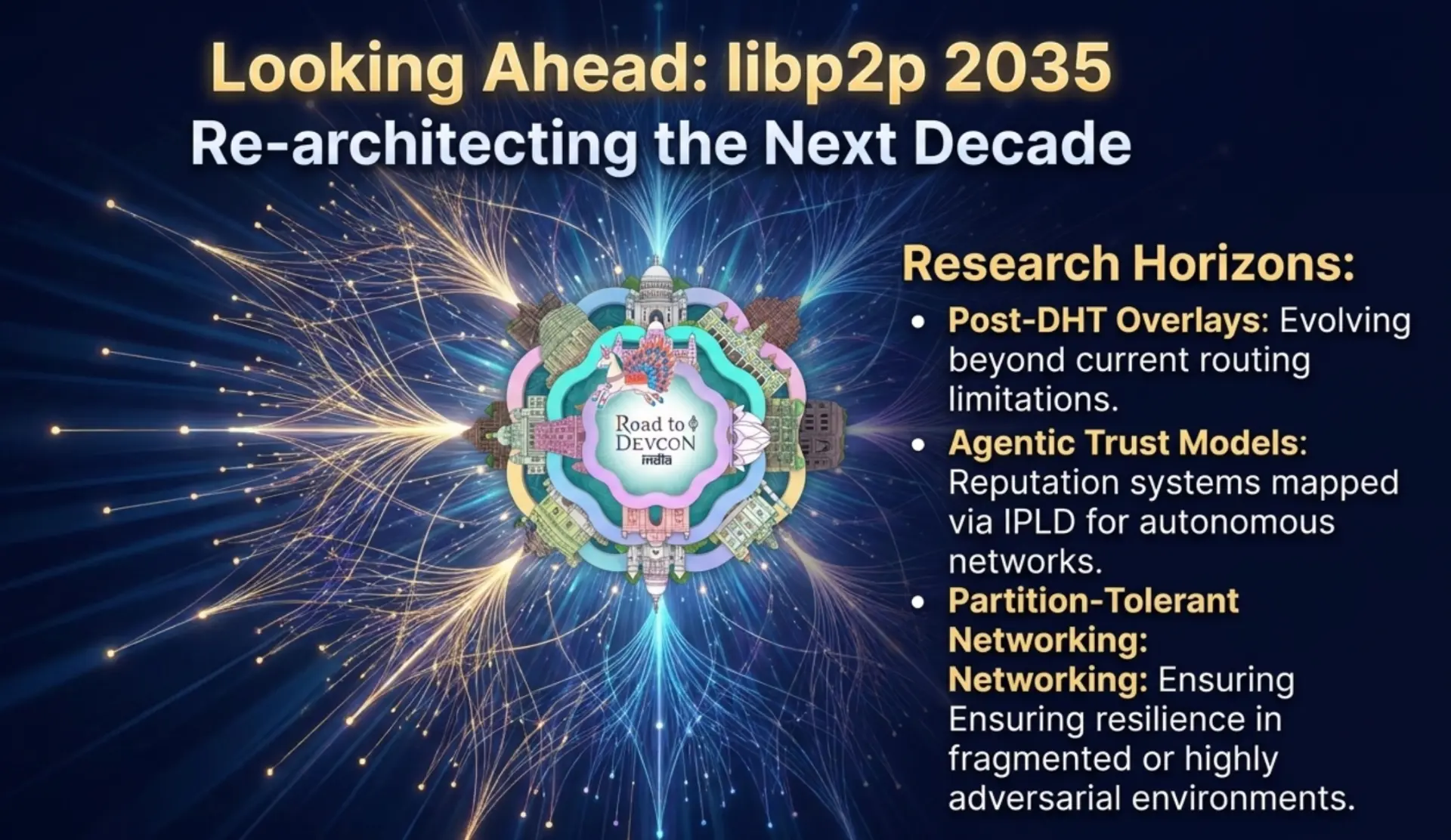
The longer-term objective is to connect Ethereum client teams, libp2p maintainers, researchers, infrastructure engineers, universities, and emerging developers around practical questions of networking, interoperability, observability, resilience, and security.
If we can measure decentralized networks, we can understand them better. If we understand them better, we can build them to be more interoperable, resilient, secure, and accessible.

Ecosystem collaboration: partner@libp2p.io · Network security research: security@libp2p.io