Leak Detect AI
The core focus: detecting metadata and side-channel leakage in decentralized AI training and inference clusters, with adversarial models for libp2p and IPFS transport.
A nine-day collaborative research retreat on modular, trust-aware, partition-tolerant networking for the next decade of decentralized AI and Ethereum infrastructure. Security is the throughline.
Reimagining the future of modular, trust-aware, partition-tolerant networking. We investigate the next architectural evolution of libp2p and ethp2p, with security as the dominant lens.
Discovery beyond Kademlia for high-churn, agent-saturated peer networks.
Dissemination primitives for global-scale networks without coordination tax.
Identity, attestation, and value transfer for autonomous agents on p2p rails.
Coordination without global consensus under sustained adversarial splits.
Detecting metadata leakage at every layer — transport, routing, agent.
Secure channels with automated provisioning and cryptographic agility.
The core focus: detecting metadata and side-channel leakage in decentralized AI training and inference clusters, with adversarial models for libp2p and IPFS transport.
Hardening secure communication channels at the libp2p transport layer. Cryptographic agility, automated certificate provisioning, and Noise pattern evolution.
Trillion Dollar Security across Ethereum consensus and execution clients. Devp2p, discv5, and gossipsub hardening against partition and eclipse attacks.
Identity management and value transfer for autonomous agents, ephemeral devices, and adversarial actors operating across decentralized peer infrastructure.
Programmable trust layers for AI systems to coordinate directly across trustless P2P infrastructure without expensive global consensus.
Rethinking peer discovery for high-churn, multi-layered networks. Beyond Kademlia: structured overlays that survive adversarial conditions.
Scalable broadcast for global-scale networks. Reducing bandwidth, latency, and coordination overhead beyond traditional gossipsub.
Networking primitives that remain functional under sustained partitions, regional shutdowns, and adversarial internet conditions.
Synthesizing a unified architectural vision: modular, trust-aware, partition-tolerant, agent-native networking for the next decade.
Past contributions across libp2p, drand, IPFS and adjacent stacks have shaped how we approach secure open-source development for Ethereum's networking layer. The retreat draws directly on that operating experience — organizing OSS ecosystems in web3, running contributor cohorts, and building tooling for maintainer health.
A parallel thread of our work focuses on contribution intelligence, attribution and performance-based funding. We've been evolving libp2p's dependency graph and contribution attribution systems to support more accurate recognition of maintainers and contributors through Ethereum-style Deep Grants and RetroPGF funding mechanisms — using contribution data, performance signals, and ecosystem metrics to allocate funds and credits based on demonstrated impact.
Live cohort dashboard — contribution intelligence and impact signals for the current PLDG cohort.
Contribution attribution and cohort analytics platform for Protocol Labs Dev Guild programs.
Research corpus tracking libp2p adoption across the Ethereum ecosystem — clients, tooling, and integrations.
Experimental dependency management and proof-of-contribution using the Ethereum Foundation's Mopro SDK.
Performance-based funding pipelines that translate dependency-graph and contribution signals into retroactive allocations.
Past contributions and organizing work across Ethereum's core network dependencies — the foundation this retreat builds on.
We see meaningful alignment between this work and the broader opportunity around ecosystem intelligence, contribution measurement, and impact attribution — and expect these threads to inform sessions at the retreat.
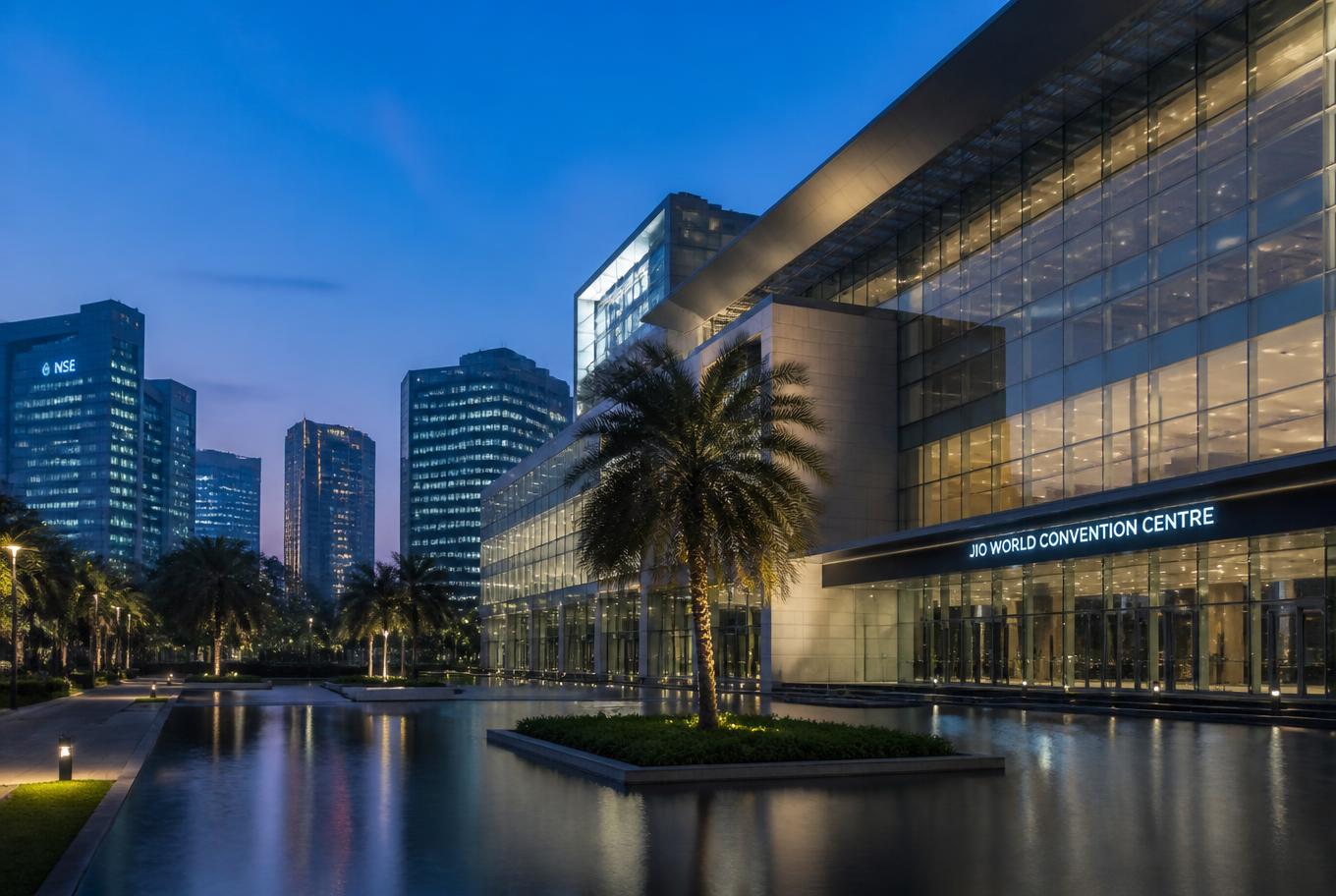
The retreat is hosted at the Jio World Centre in Bandra Kurla Complex, Mumbai — a purpose-built convention campus with focused breakout studios and plenary halls. The setting allows participants to step away from everyday work and focus on the foundational problems of decentralized networking and security.
Primary gateway. ~5 km / 15–25 min by cab from T2 to Bandra Kurla Complex. Prepaid taxi and Uber/Ola pickups are just outside both terminals.
Bandra Terminus (BDTS) is ~5 km and Lokmanya Tilak Terminus (LTT) ~8 km. Bandra and Kurla suburban stations are a 10–15 min cab ride from the venue.
The BKC station on Line 3 sits within walking distance of Jio World Centre and connects to the airport and south Mumbai underground, bypassing surface traffic.
Jio World Centre
Jio World Convention Centre
G Block, Bandra Kurla Complex, Bandra East
Mumbai 400051, Maharashtra, India
We are convening protocol architects, core developers, applied cryptographers, and security researchers. Selection is curated to balance deep research expertise with practical systems experience.
Deadline · 11:59 PM PST · August 15, 2026